Message from Leaders
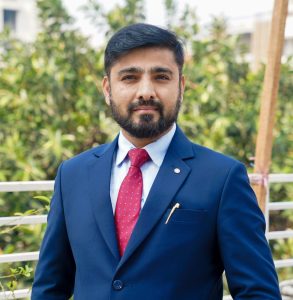
Dr. Mohammad Samiul Islam
It is my great pleasure to welcome you to the Department of Economics at Presidency University. Established in 2023, the Department of Economics is committed to building a center of excellence in economics education, research, and policy engagement. In an increasingly interconnected and rapidly c...
Read full messageThe Department of Economics
The Department of Economics at Presidency University is committed to excellence in economics education, research, innovation, and policy engagement. Established in 2023, the Department has been developed with a clear vision of creating a dynamic academic environment where students acquire rigorous theoretical knowledge, quantitative and analytical skills, research competencies, and practical understanding of real-world economic issues.
We offer undergraduate and postgraduate programs in Economics designed to prepare students for successful careers in academia, government, banking and finance, development organizations, research institutions, corporate organizations, international agencies, and public policy.
Our academic approach combines economic theory with mathematics, statistics, econometrics, data analysis, research methodology, and real-world applications. Through classroom learning, research projects, seminars, workshops, field studies, academic competitions, presentations, and professional engagement, students are encouraged to become critical thinkers, evidence-based decision makers, responsible citizens, and future leaders.
The curriculum covers the major areas of modern economics, including:
· Microeconomics
· Macroeconomics
· Mathematical Economics
· Statistics
· Linear Algebra and Calculus
· Econometrics
· Development Economics
· International Economics
· Monetary Economics
· Public Finance
· Agricultural Economics
· Environmental Economics
· Health Economics
· Labour Economics
· Industrial Economics
· Urban Economics
· Financial Economics
· Behavioral Economics
· Managerial Economics
· Research Methodology
· Game Theory
· Project Evaluation
· Contemporary Economic Issues
The Department also promotes interdisciplinary learning by connecting economics with data science, public policy, business, sociology, political science, environmental studies, and development studies.
Programs Offering
BACHELOR OF SOCIAL SCIENCE (BSS) IN ECONOMICS (132 CREDITS)
The Department of Economics has been offering the Bachelor of Social Science (BSS) in Economics program since 2023. This is a four-year undergraduate program consisting of 132 credits. The curriculum has been revised over the years to align with the evolving demands of the job market, global academic standards, and national development priorities.
The BSS program is designed to provide students with a strong foundation in economic theory, quantitative analysis, policy evaluation, and applied research. It includes core courses in microeconomics, macroeconomics, mathematics, statistics, econometrics, development economics, and public finance, as well as specialized courses such as environmental economics, labor economics, health economics, industrial economics, and international economics. The program promotes interdisciplinary learning by integrating concepts from sociology, political science, and data science, helping students become well-rounded professionals with practical and analytical capabilities.
Admission Requirements for BSS in Economics Program
Applicants must have completed 12 years of formal education. The following qualifications are acceptable:
- SSC and HSC with a minimum GPA of 2.5 or second division in each;
- O-Level with five subjects and A-Level with two subjects completed, each with a minimum GPA of 2.0.
MASTER OF SOCIAL SCIENCE (MSS) IN ECONOMICS (36, 48, OR 60 CREDITS)
The MSS in Economics is a graduate-level program designed to build advanced knowledge and applied research skills in economics. It caters to students aiming for academic careers, research positions, and leadership roles in the public and private sectors, development organizations, think tanks, and financial institutions.
The program offers three different credit-based pathways depending on students' prior qualifications and professional experience:
- 36 credits – One-year program
- 48 credits – One-and-a-half-year program
- 60 credits – Two-year program
The MSS curriculum is composed of four categories of courses: core, specialized, research methodology, and thesis. Core and advanced courses focus on macroeconomics, microeconomics, mathematical economics, econometrics, monetary economics, development economics, project evaluation, and contemporary economic issues. A strong emphasis is placed on applied econometrics and quantitative research.
A compulsory thesis is required for all students in the program, allowing them to engage in independent research under faculty supervision. This not only deepens their understanding of economic issues but also equips them with the skills to contribute to academic and policy-related research.
Admission Requirements for MSS in Economics Program
Applicants must have completed a bachelor's degree with a minimum CGPA of 2.5 or second division. The following categories are eligible for admission:
- Four-year BSS (Honours) in Economics;
- Four-year honours degree in any other discipline (with or without work experience in economics or related fields);
- Three-year bachelor's degree (honours or pass) in any discipline (with or without professional experience).
Applicants from categories 2 and 3 may be required to take additional preparatory or foundational courses as recommended by the Admission Committee based on their academic background and needs.
Total Minimum Credits Required to Complete the Program
To earn an MSS in Economics degree, students must complete a minimum of 36 credits, including a compulsory thesis. The total credit requirement will vary depending on the student's prior academic qualifications and professional background (36, 48, or 60 credits).
Career Prospects of Economics Graduates from the Department of Economics at Presidency University
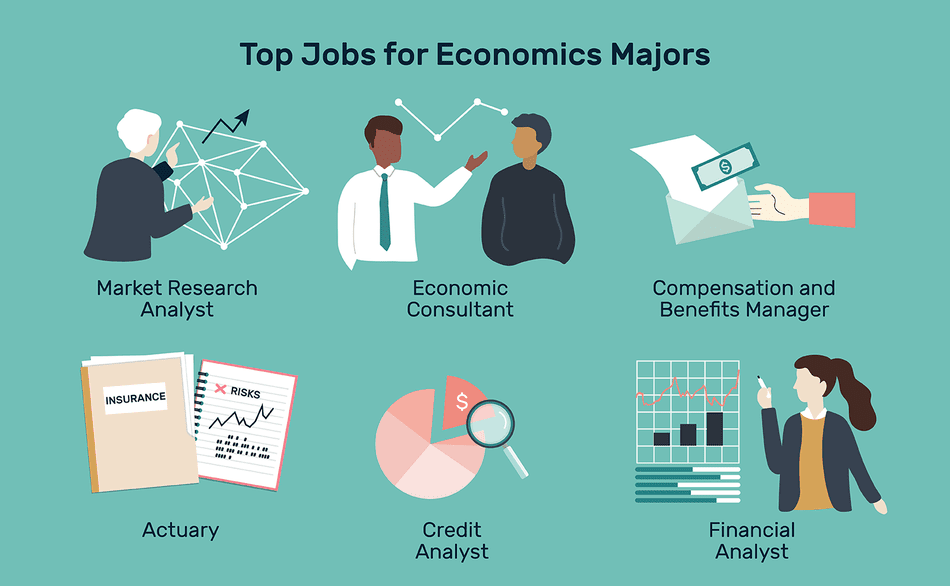
Graduates of both the BSS in Economics and MSS in Economics programs are equipped with the analytical, quantitative, and research skills necessary to succeed in a wide range of professional fields in both Bangladesh and abroad. The department's emphasis on theoretical grounding, empirical application, and interdisciplinary integration makes Economics graduates highly competitive in diverse job markets.
1. Academic and Research Careers
Graduates can pursue careers as lecturers, researchers, and academic coordinators in universities, colleges, and think tanks. With advanced degrees, they are well-prepared for academic roles both nationally and internationally. Many also go on to pursue MPhil, PhD, or professional degrees in Economics, Public Policy, Development Studies, and related fields. Research organizations and policy institutes such as BIDS, PRI, SANEM, CPD, and UN agencies regularly employ trained economists for policy analysis and economic forecasting.
2. Government, Policy, and Public Administration
The Department of Economics provides students with strong preparation for roles in public policy, planning, and governance. Graduates are highly suitable for the Bangladesh Civil Service (BCS) and other competitive public sector exams. They can work in ministries, planning commissions, economic zones, regulatory authorities, and government agencies involved in fiscal planning, budgeting, and development strategy.
3. Banking, Finance, and Corporate Sector
Economics graduates are in high demand in commercial banks, central banking (Bangladesh Bank), insurance companies, stock markets, and multinational corporations (MNCs). Roles include financial analyst, credit officer, risk analyst, business development officer, and more. Their training in econometrics, finance, and quantitative analysis enables them to thrive in data-driven roles such as investment analysis, portfolio management, and economic consulting.
4. Development Organizations and NGOs
Graduates often work with international NGOs, development partners, and donor agencies such as UNDP, World Bank, ADB, BRAC, Save the Children, and others. Roles include project officer, monitoring and evaluation (M&E) specialist, development researcher, and policy advisor. Their background in development economics, project evaluation, and public finance gives them a competitive edge in these sectors.
5. Data Analysis, Consulting, and International Careers
With increasing global demand for data-informed decision-making, Economics graduates from PU are well-prepared for careers in data analytics, impact assessment, policy consulting, and business intelligence. Graduates frequently pursue opportunities abroad in academic institutions, research centers, multinational organizations, and international civil service. Strong quantitative and communication skills, along with exposure to international standards (ISCO, BNQF, etc.), make them adaptable to global markets and graduate studies abroad.
6. Entrepreneurship, Freelance Work, and Private Sector Innovation
With strong problem-solving, critical thinking, and communication skills, many graduates choose entrepreneurial paths—founding startups, research firms, and consultancy services. They also work independently as freelance researchers, financial consultants, and content developers in economic media and education platforms. Economics graduates are equally capable of contributing to digital finance, fintech, and policy-focused startups.
Notice & Events
View All 30 Aug

Programs Offered
View AllTuition Fees & Waiver
Full Details| Programs | Credit Hours |
Per Credit Fee (BDT) |
Total Fee (BDT) |
Merit Scholarship (BDT) | ||||
|---|---|---|---|---|---|---|---|---|
| 7–7.99 10% |
8–8.88 20% |
9–9.99 35% |
10 50% |
10* 90% |
||||
| BSS in EconomicsDay Batch | 129+3 | 2,100/- | 3,61,900/- | 2,29,030/- Package | ||||
* Package fee includes all charges. Please confirm with the admission office.
| Programs | Credit Hours |
Per Credit Fee (BDT) |
Total Fee (BDT) |
Total Cost (BDT) |
|---|---|---|---|---|
| MSS in Economics1 Year | 30+6 | 3,000/- | 1,36,000/- | 50,080/-Package |
| MSS in Economics1.5 Years | 42+6 | 3,000/- | 1,78,000/- | 60,064/-Package |
| MSS in Economics2 Years | 54+6 | 3,000/- | 2,26,000/- | 70,102/-Package |
* Package fee includes all charges. Please confirm with the admission office.
Academic & Administrative Members

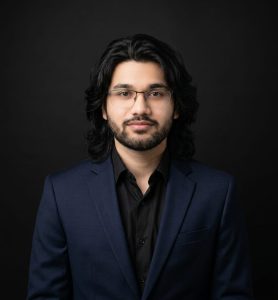
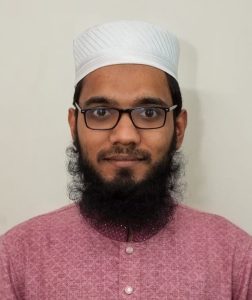




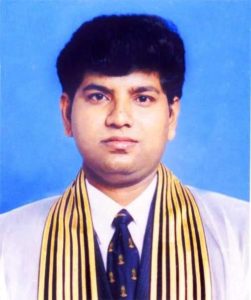



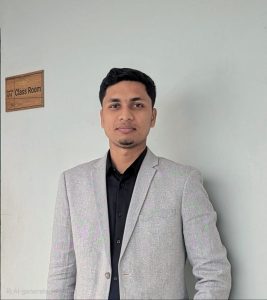
Notable Alumni
View AllAlumni information coming soon.
Club








.jpeg)